
In a world where data drives innovation, the demand for faster and more efficient connectivity is unrelenting. From streaming services to the Internet of Things (IoT) and the rise of 5G, our digital infrastructure faces ever-increasing pressure to keep up. At the forefront of this revolution is fibre optic technology, pushing boundaries to achieve unprecedented speeds. In this blog, we explore the latest advancements in fibre optic cable speeds and their transformative potential.

Internet of things
Advancements – The Need for Speed
Modern society’s insatiable appetite for bandwidth stems from data-intensive applications like 4K video streaming, cloud computing, and remote work. Additionally, emerging technologies such as telemedicine and autonomous vehicles rely on fast, low-latency connections. Current fibre optic networks, while fast, must continue evolving to meet these growing demands. Faster speeds not only enhance user experience but also drive innovation and economic growth.
Key Technological Advancements
-
Higher Capacity Fibres
Recent breakthroughs in fibre design, such as hollow-core fibres, promise faster data transmission by reducing signal loss. Unlike traditional solid-core fibres, hollow-core designs use air-filled cores to minimise light scattering, enabling speeds of over 1 petabit per second in laboratory settings. These fibres are expected to play a significant role in future high-speed networks.

-
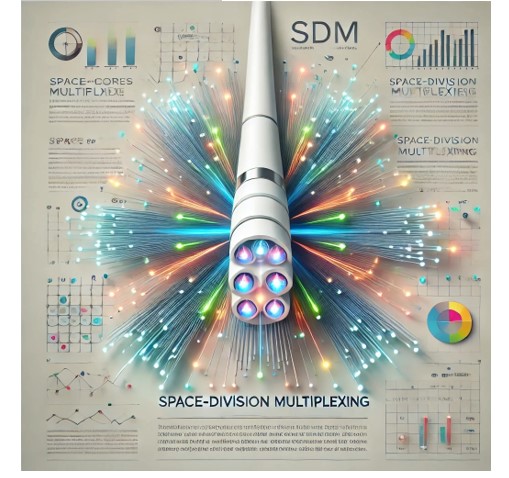
Space-Division Multiplexing (SDM)
SDM technology is revolutionising fibre capacity by enabling multiple data streams within a single cable. Using multiple cores or modes, SDM can increase bandwidth tenfold compared to traditional single-mode fibres. This advancement is particularly critical for scaling global communication infrastructure.

-
Advanced Modulation Techniques
New encoding methods like Quadrature Amplitude Modulation (QAM) are improving data transmission efficiency. By packing more information into light signals, QAM reduces latency and maximises bandwidth without requiring additional physical cables.
-
Fibre Amplification Improvements
Raman amplifiers and erbium-doped fibre amplifiers extend the distance that signals can travel without degradation. These technologies are crucial for long-haul networks, reducing the need for frequent signal regeneration stations.
-
Integration with AI and Automation
Artificial intelligence (AI) is being leveraged to optimise fibre optic networks.
AI systems can predict and correct errors in real-time, ensuring smoother data transmission and greater overall efficiency.
Record-Breaking Fibre Optic Cable Speeds: Recent Milestones
Global research institutions have made headlines with groundbreaking speed achievements. For instance, Japan’s National Institute of Information and Communications Technology set a new record by achieving 319 terabits per second using multi-core fibres. Similarly, hollow-core fibre tests have demonstrated speeds that were once deemed impossible. These milestones highlight the potential for fibre optics to meet the data demands of tomorrow.

Challenges in Scaling These Technologies
While the advancements are promising, several hurdles remain:
- Cost of Implementation: Manufacturing next-generation fibres and upgrading infrastructure involve significant expenses.
- Infrastructure Compatibility: Existing networks need substantial upgrades to accommodate advanced technologies like SDM and hollow-core fibres.
- Environmental Considerations: Balancing innovation with sustainability is essential as fibre optic production scales up.

The Future of Fibre Optic Cable Speeds
The future of fibre optics is filled with promise. Experts predict that petabit-level speeds will become commercially viable within the next decade. These advancements will integrate seamlessly with technologies like 6G and quantum communication, setting the stage for ultra-connected smart cities and immersive virtual worlds. The potential to revolutionise industries such as healthcare, finance, and education is immense.

Future of Fibre Optics
Conclusion
As the backbone of the digital age, fibre optics continues to break barriers in speed and efficiency. The latest innovations not only address current challenges but also pave the way for a future where connectivity knows no limits. Staying informed about these advancements is vital for businesses and individuals alike.
Curious about how cutting-edge fibre optics can transform your connectivity? Contact the friendly Anderson sales team on (03) 9761 7600 or email sales@andcorp.com.au today to explore the possibilities!