
Introduction
Fibre optic networks depend on more than just glass fibres. The outer layers protect, stabilise, and extend the service life of every cable. Among these protective materials, nylon in fibre optic cables plays a critical role. Nylon, also known as polyamide, is valued for its strength, flexibility, and resistance to harsh environments. Because of these qualities, it remains one of the most important polymers in modern cable design.
Different nylons, however, deliver different levels of performance. Some absorb moisture quickly, while others resist water and chemicals for decades. Therefore, choosing the right nylon is not just a material decision — it directly affects how a fibre optic cable performs over time. In particular, three nylons dominate the market: PA6, PA11, and PA12. Each has a distinct balance of cost, durability, and suitability for either indoor or outdoor applications.
In this article, we explore these three major nylons in detail. You will learn how they compare, why they matter, and where each type is commonly used. Additionally, we will highlight key performance differences, such as moisture absorption and chemical resistance. By the end, you will understand why nylon choice can make or break a fibre optic installation, and you will see how leading products use the right material for long-term reliability.
Why Nylon Matters in Fibre Optics
Fibre optic cables are built to last decades, but they face constant challenges from their environment. Temperature shifts, ultraviolet (UV) light, chemicals, and even pests can all reduce performance over time. Therefore, the choice of protective materials is not an afterthought — it is central to network reliability. Nylon is one of the most widely used polymers for cable jackets and buffer tubes because it delivers a rare balance of strength, toughness, and flexibility.
Material selection plays a critical role in long-term cable reliability. To understand this in more detail, see our guide on why fibre optic cables fail.
Unlike softer plastics, nylon resists abrasion and mechanical stress. It shields the delicate glass fibres from bending, crushing, and impacts during installation and operation. Additionally, nylon absorbs less moisture than many other polymers, which prevents swelling and dimensional changes that could damage the fibres. These characteristics make nylon a proven choice for cables that must operate indoors, outdoors, or in hybrid environments.
Another reason nylon matters is standards compliance. Fibre optic products must meet strict safety and performance requirements, including fire ratings and installation rules. In Australia, AS/CA S008:2020 defines cabling product requirements for safety and quality. By aligning with such standards, manufacturers ensure that their nylon formulations deliver not only performance but also regulatory assurance.
In summary, nylon provides the backbone of fibre optic protection. It resists physical stress, environmental degradation, and chemical attack, while also enabling compliance with national and international benchmarks. Without nylon, fibre optic cables would struggle to achieve the service life and durability that networks demand.
PA6 (Nylon 6) Nylon in Fibre Optic Cables
PA6, or Nylon 6, is one of the most common and affordable nylons used in fibre optic cable design. Manufacturers often choose it because it is widely available, cost-effective, and mechanically strong. In many applications, PA6 provides an acceptable balance of performance and price. However, when long-term reliability in harsh conditions is required, PA6 shows several limitations that buyers and installers must consider.
Strengths of PA6
Nylon 6 offers solid mechanical protection. It resists impacts, provides good abrasion resistance, and helps the fibre withstand the physical stresses of handling and installation. Installers appreciate that PA6 jackets are tough enough to protect against crushing and kinking when cables are pulled through ducts or routed in tight indoor spaces. Additionally, PA6 has decent thermal performance, tolerating a reasonable range of operating temperatures without significant degradation.
Another advantage of PA6 is its cost profile. Because it is less expensive than high-performance nylons like PA11 or PA12, it allows manufacturers to produce more budget-friendly fibre optic cables. For projects with tight capital expenditure limits, PA6 can be an attractive choice. In indoor settings with controlled climates, it often performs well enough to meet service life expectations.
Limitations of PA6
Despite its strengths, PA6 also presents significant drawbacks. The biggest challenge is moisture absorption. Nylon 6 has a polar molecular structure that draws in water from the environment. As a result, it can absorb up to 9% of its weight in moisture under high-humidity conditions. This uptake leads to swelling, dimensional instability, and mechanical property changes. For fibre optic cables, that means potential issues with tube expansion, stress on fibres, and even long-term reliability risks.
In addition to water uptake, PA6 has limited outdoor durability. Prolonged exposure to UV radiation accelerates its ageing, making it brittle and prone to cracking. While stabilisers and additives can slow this process, PA6 still does not match the long-term weather resistance of PA11 or PA12. Therefore, it is rarely chosen for outdoor cable designs that require decades of service life.
Where PA6 is Used
Because of these trade-offs, PA6 is mainly used in indoor fibre optic cables or in outdoor environments where exposure is minimal. Data centres, office networks, and short-run installations often rely on PA6-based designs because the environmental conditions are controlled. In such settings, PA6 provides reliable performance at a competitive cost.
However, in telecom backbones, long-haul fibre, or harsh outdoor installations, PA6 is generally not the best choice. Installers and network planners must weigh the upfront savings against the risk of premature ageing and moisture-related failures.
Summary of PA6
In summary, PA6 delivers affordability, strength, and availability, making it a practical option for certain cable types. However, its tendency to absorb moisture and degrade under UV limits its suitability for outdoor or mission-critical networks. Therefore, while PA6 has its place in the fibre optic world, buyers seeking long service life and robust environmental protection should look beyond PA6 to higher-performing nylons like PA11 and PA12.
PA11 (Nylon 11) Nylon in Fibre Optic Cables
PA11, also known as Nylon 11, stands out as one of the most innovative materials used in fibre optic cables. Unlike PA6 and PA12, PA11 comes from a renewable source — castor oil. This bio-based origin gives it a unique advantage in a market that increasingly values sustainability. At the same time, PA11 delivers strong mechanical properties, impressive flexibility, and reliable performance in cold environments. However, its higher cost often limits its use to specialised or premium applications.
Strengths of PA11
PA11’s flexibility sets it apart from other nylons. It bends easily without cracking, which helps installers route cables in tight spaces or around corners without damaging the jacket. Additionally, its impact resistance protects fibres against sudden shocks, drops, or handling errors during installation. These characteristics make PA11 a dependable choice in environments where physical stress is unavoidable.
Cold-weather performance is another key strength. While some polymers turn brittle in freezing conditions, PA11 remains tough. This resilience ensures that fibre optic networks continue to function reliably even in remote or harsh climates. Moreover, PA11 resists many chemicals and hydrocarbons, which further improves its suitability for industrial or outdoor installations.
Sustainability Benefits
Because PA11 originates from castor oil, it offers a smaller environmental footprint than petroleum-based nylons. Network operators who seek greener solutions often see PA11 as an attractive option. Therefore, PA11 supports not only technical reliability but also corporate sustainability goals. This alignment with environmental responsibility strengthens its role in next-generation network projects.
Limitations of PA11
Despite its many strengths, PA11 faces two main limitations: cost and availability. It is more expensive than PA6 and often more costly than PA12. This higher price means manufacturers and buyers reserve it for applications where its flexibility, cold-weather performance, or sustainability benefits justify the investment. Additionally, supply chains for PA11 are more limited compared to PA6 or PA12, which can impact global availability.
Where PA11 is Used
Because of its qualities, PA11 often appears in specialist fibre optic cables. Installers use it in projects that demand both resilience and flexibility, such as networks in cold regions or industrial facilities with harsh chemical exposure. Telcos and enterprise customers who prioritise sustainability also turn to PA11-based solutions when budgets allow. In these cases, PA11 helps balance long-term performance with environmental responsibility.
Summary of PA11
In summary, PA11 brings flexibility, impact resistance, chemical durability, and bio-based sustainability to fibre optic cable design. Although it costs more than PA6 and PA12, it delivers unique benefits that justify its use in premium and specialist applications. As sustainability gains momentum across industries, PA11 may play an even greater role in future network deployments.
PA12 (Nylon 12) Nylon in Fibre Optic Cables
Among the nylon family, PA12 stands out as the gold standard for fibre optic cables. Installers, network planners, and manufacturers value PA12 because it combines durability, low moisture uptake, and chemical resistance. These qualities make PA12 the preferred choice for cables that must perform for decades in challenging outdoor conditions.
Strengths of PA12
PA12 offers exceptional dimensional stability. Unlike PA6, it absorbs very little water. In fact, its moisture uptake is one of the lowest in the nylon family, which means the material maintains consistent performance even in humid or wet environments. As a result, PA12 jackets and buffer tubes protect fibres without swelling or distorting over time.
Another major strength is its chemical resistance. PA12 resists oils, fuels, solvents, and a wide range of industrial contaminants. Therefore, it performs well in harsh environments where cables face exposure to aggressive chemicals. Additionally, PA12 maintains impact strength and flexibility across a broad temperature range, including extreme heat and cold.
PA12 also excels under long-term outdoor exposure. With the right stabilisation systems, it resists UV radiation and oxidation for decades. This stability ensures that fibre optic cables retain their protective qualities over a 20–25+ year service life. For mission-critical networks, this reliability is not optional — it is essential.
Limitations of PA12
While PA12 delivers unmatched performance, it comes with higher costs. The material is more expensive than PA6 and often slightly more costly than PA11. Because of this, some buyers hesitate to specify PA12 for price-sensitive projects. However, the total cost of ownership often favours PA12 because its long service life reduces maintenance, replacement, and downtime expenses.
Another limitation involves supply considerations. Although PA12 is widely produced, global demand from multiple industries can create tight supply conditions. Fibre optic manufacturers must plan sourcing carefully to secure consistent availability.
Where PA12 is Used
PA12 dominates in outdoor and high-performance fibre optic cables. Telecom networks, long-haul backbones, and enterprise systems often rely on PA12 for long-term stability. Data centres and industrial facilities also choose PA12-based designs because of its resistance to moisture, UV, and chemicals. In each case, PA12 ensures that fibre networks deliver reliable performance even under the toughest environmental conditions.
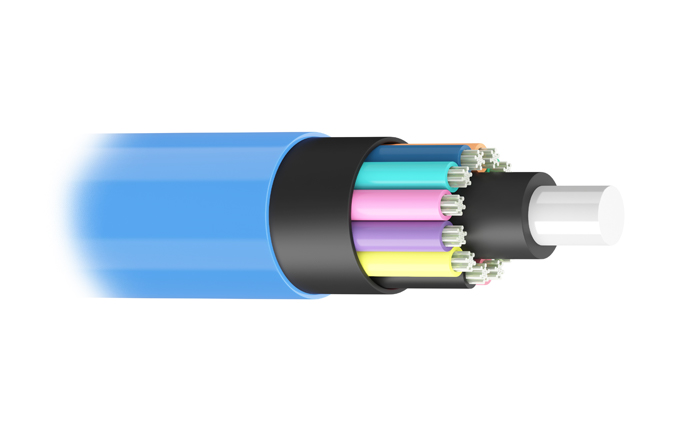
For a practical example, the RapidConnect TR-Series Mini Loose Tube Cable demonstrates how PA12 enables compact, gel-free, and long-life fibre optic construction. This product highlights why PA12 is trusted for critical indoor/outdoor applications.
Summary of PA12
In summary, PA12 delivers outstanding performance across all key metrics: moisture resistance, chemical durability, dimensional stability, and long-term ageing. Although it costs more than other nylons, its extended service life and reliability justify the investment. Therefore, PA12 remains the benchmark for fibre optic cable jackets and tubes in harsh environments, making it the material of choice for networks that demand decades of uninterrupted service.
Comparison Table: PA6 vs PA11 vs PA12 Nylon in Fibre Optic Cables
Choosing the right nylon requires more than recognising names. Each material offers unique strengths and weaknesses that directly affect fibre optic performance. By comparing PA6, PA11, and PA12 side by side, network planners and buyers can make informed decisions.
Key Property Comparison
| Property | PA6 | PA11 | PA12 |
|---|---|---|---|
| Moisture Absorption | High | Low | Very Low |
| Flexibility | Medium | High | High |
| Chemical Resistance | Moderate | Good | Excellent |
| Outdoor Durability | Limited | Good | Excellent |
| Cost | Low | High | High |
How to Read This Table
The table shows clear contrasts. PA6 provides cost savings but struggles with moisture and outdoor performance. In comparison, PA11 improves flexibility and sustainability, making it suitable for cold or eco-conscious projects. PA12, however, leads in nearly every category. It resists water, tolerates chemicals, and withstands decades of UV exposure, which makes it the strongest candidate for outdoor and high-performance applications.
Why This Matters
Installers and network designers should not treat nylon choice as a minor detail. The jacket and tube materials define how well a cable survives real-world conditions. By selecting the right nylon, teams can avoid premature ageing, costly replacements, and unnecessary downtime.
In short, the comparison highlights a simple truth: PA6 saves money upfront, PA11 balances sustainability and flexibility, and PA12 secures long-term durability.
5 Key Benefits of Nylon in Fibre Optic Cables
Nylon continues to play a leading role in fibre optic cable design because it delivers advantages that other polymers cannot match. The following five benefits highlight why nylon remains a trusted choice for both indoor and outdoor networks.
1. Strong Mechanical Protection
Nylon shields delicate glass fibres from crushing, bending, and abrasion. It helps cables survive tough handling during installation and use.
2. UV and Weather Resistance for Nylon in Fibre Optic Cables
With stabilisers, nylon withstands prolonged exposure to sunlight and temperature extremes. This durability keeps cables reliable in outdoor environments.
3. Chemical and Abrasion Resistance
Nylon resists oils, fuels, solvents, and common industrial contaminants. Its surface hardness also prevents wear from repeated contact or movement.
4. Long-Term Durability of Nylon in Fibre Optic Cables
By reducing moisture uptake and resisting environmental stress, nylon extends cable service life. Networks benefit from fewer replacements and lower lifecycle costs.
5. Reliable Performance Across Temperatures
Nylon maintains flexibility and toughness in both cold and hot climates. As a result, cables perform consistently in diverse global conditions.
These environmental factors directly influence long-term performance and are among the most common causes of fibre optic cable failure in real-world deployments.
Frequently Asked Questions about Nylon in Fibre Optic Cables
1. What is nylon used for in fibre optic cables?
Nylon protects fibre optic cables from mechanical stress, moisture, and environmental damage. Manufacturers use it for jackets and buffer tubes because it combines strength, flexibility, and resistance to chemicals. Additionally, nylon helps fibres survive tough handling during installation. Without nylon, fibre optic cables would struggle to maintain performance in harsh conditions or meet the long service lives that networks demand.
2. Why is PA12 considered better than PA6?
PA12 absorbs far less moisture than PA6, which keeps cable dimensions stable over time. It also resists chemicals and UV exposure more effectively. As a result, PA12 delivers longer service life in outdoor applications, where PA6 may degrade or swell. Although PA12 costs more upfront, it reduces maintenance and replacement costs, making it the preferred choice for critical, high-performance networks.
3. Is PA11 more sustainable than other nylons?
Yes. PA11 comes from castor oil, a renewable resource, while most nylons are petroleum-based. This bio-based origin gives PA11 a smaller carbon footprint. Network operators who prioritise sustainability often choose PA11 for environmentally responsible projects. In addition, PA11 maintains strong flexibility and durability, which means customers do not need to compromise on technical performance when selecting a greener material.
4. How does moisture absorption affect fibre optic cable performance?
Moisture absorption causes some nylons, like PA6, to swell and lose dimensional stability. When this happens, buffer tubes can expand and stress the fibres inside, potentially leading to microbending losses or mechanical failures. High moisture uptake also shortens service life, especially in outdoor environments. For this reason, network designers often prefer nylons with low water absorption, such as PA11 and PA12, to ensure long-term reliability.
5. Which nylon is best for outdoor fibre optic networks?
PA12 is widely recognised as the best nylon for outdoor fibre optic networks. It combines low moisture absorption, excellent chemical resistance, and superior UV stability. These qualities allow PA12 to protect cables for 20–25+ years in exposed conditions. While PA11 also performs well outdoors, PA12 typically offers better overall balance of cost, availability, and long-term durability, which makes it the standard for mission-critical installations.
Conclusion – Nylon in Fibre Optic Cables
Nylon remains one of the most important materials in fibre optic cable design. It protects fibres from mechanical stress, moisture, and environmental damage while ensuring that networks operate reliably for decades. As we have seen, PA6 offers affordability for controlled environments, PA11 provides sustainability and flexibility for specialist projects, and PA12 delivers unmatched durability for outdoor and mission-critical networks.
Therefore, the choice of nylon directly impacts network performance and total cost of ownership. A lower upfront price may save money today, but it can create higher maintenance costs tomorrow. Conversely, investing in premium nylons like PA12 secures long-term reliability and reduces the risk of premature failure.
When you specify a fibre optic cable, ask which nylon protects it and why. By doing so, you ensure that the cable will withstand real-world conditions, comply with standards, and meet your service life expectations.
For a proven example, explore the RapidConnect TR-Series Mini Loose Tube Cable. This product showcases how the right nylon choice (PA12) supports compact design, gel-free performance, and reliable operation in both indoor and outdoor applications.