
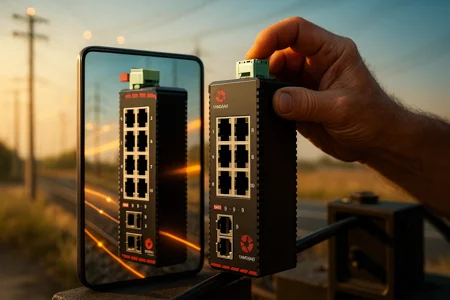
Industrial Media Converter – Built for Harsh Environments
Introduction – Why an Industrial Media Converter Matters
As network demands grow across mining operations, transport infrastructure, smart cities, and heavy manufacturing, the need for a reliable Industrial Media Converter has become non-negotiable. These rugged devices ensure stable fibre connectivity in environments where traditional commercial-grade equipment simply can’t survive.
Extreme temperatures, vibration, dust, and electromagnetic interference are common in industrial settings. Because of these challenges, choosing the right media converter isn’t just about connectivity—it’s about network uptime, safety, and long-term performance.
To explore how media converters function across different network types, visit our detailed guide:
Media Converters – Bridging Network Gaps
What Is an Industrial Media Converter?
An Industrial Media Converter is a ruggedised network device that connects copper Ethernet and fibre optic cabling in extreme environments. Unlike standard converters, it is built to operate in challenging conditions—such as high heat, sub-zero cold, vibration, and dust.
These converters maintain reliable performance where standard models would fail. Their hardened enclosures, extended temperature support, and DIN rail mounting make them ideal for field deployment.
Here are the key features that define an industrial media converter:
- Supports wide operating temperatures (e.g. -40°C to +75°C)
- Built with vibration-resistant, dustproof housings
- Often includes Power over Ethernet (PoE) capability
- Mounts securely to DIN rails or walls
- Offers redundant power inputs for uninterrupted uptime
- Compatible with single-mode or multimode fibre
To better understand the basic functions of fibre media converters, visit our beginner’s guide:
How Do Fibre Media Converters Work?
Key Benefits of an Industrial Media Converter
Industrial environments demand durability, uptime, and safety. A standard media converter might fail when exposed to heat, dust, or vibration—but an Industrial Media Converter thrives in these conditions. Because of its rugged design, it plays a crucial role in connecting fibre networks to copper-based devices in places traditional equipment can’t go.
1. Operates Reliably in Harsh Conditions
Unlike commercial models, industrial units withstand temperature extremes ranging from -40°C to +75°C. They continue operating even in dusty or high-vibration areas—perfect for mines, tunnels, or rail corridors.
2. Supports Fibre Extension to Remote Areas
Fibre allows you to push data across long distances. With an industrial converter, you can extend fibre connectivity to outdoor security cameras, control systems, or isolated monitoring stations without worrying about environmental impact.
3. Powers Remote Devices with PoE
Many industrial converters also support Power over Ethernet. As a result, you can deliver both power and data through a single cable—reducing installation costs and simplifying deployment in remote locations.
To learn more about the value of PoE in tough environments, explore:
PoE Media Converter – Power and Data Over One Cable
4. Reduces Downtime with Redundant Power Inputs
Because critical infrastructure can’t afford outages, many industrial media converters include dual power inputs. This redundancy ensures continuity, even if one power source fails.
5. Seamlessly Integrates with Legacy Infrastructure
Even in older facilities, these converters connect new fibre networks to existing copper devices. In addition, they require minimal changes to your network layout—saving time and budget.
Common Use Cases Across Industries
Industrial operations often take place in harsh and remote environments. Because of this, network equipment must be built for reliability, resilience, and long-distance transmission. An Industrial Media Converter supports these conditions by delivering stable connectivity where commercial devices would struggle—or fail entirely.
Mining and Resource Extraction
In mining operations, fibre networks need to reach deep underground or remote outdoor locations. Industrial media converters withstand the intense dust, vibration, and extreme temperatures common on-site. As a result, they ensure uninterrupted communication between surface control rooms and underground equipment.
Transportation and Rail Infrastructure
Rail corridors, subways, and highways require dependable data connections for signalling, surveillance, and communication systems. Industrial media converters provide rugged DIN rail mounting, vibration resistance, and long-distance fibre reach—making them ideal for roadside cabinets and signal control enclosures.
Learn how to plan converter mounting with
Standalone vs Chassis Media Converters – Which Is Right for You?
Oil, Gas, and Energy Facilities
Power plants, pipelines, and offshore rigs operate in some of the toughest conditions on Earth. Industrial converters support wide temperature ranges and redundant power inputs—delivering high uptime even in corrosive, high-EMI, or explosive environments.
Manufacturing and Industrial Automation
Automated factories rely on real-time communication between PLCs, sensors, and control systems. With an industrial media converter, fibre can extend into dusty production zones, and PoE-powered devices can function without needing local electricity.
Outdoor Surveillance and Remote Sites
Need to install a camera at the far end of a property with no power nearby? Use a PoE-capable industrial media converter to deliver both data and power over fibre. As a result, you reduce cabling costs and increase reliability.
A perfect product example is the
YWS28GE-POE-I Industrial PoE Media Converter by Yamasaki
This rugged, IP-rated unit supports wide temperature ranges, dual power inputs, and secure DIN rail mounting.
Industrial vs Commercial Media Converters
When selecting a media converter, it’s important to match the device to its environment. While commercial-grade models work well in offices or data centres, they often fail in outdoor, mobile, or industrial conditions. In contrast, the Industrial Media Converter is specifically built for durability and performance in these challenging scenarios.
Below is a comparison to help you understand when—and why—you should choose an industrial-grade solution.
Feature Comparison Table
| Feature | Industrial Media Converter | Commercial Media Converter |
|---|---|---|
| Operating Temperature | -40°C to +75°C | 0°C to +40°C |
| Mounting Style | DIN rail or wall-mount | Desktop or standard rack |
| Casing Material | Sealed, rugged, dust-resistant | Light-duty metal or plastic housing |
| Power Redundancy | Dual-input for uninterrupted uptime | Single power input |
| Vibration/EMI Resistance | High resistance with shielding | Limited resistance |
| Use Cases | Mines, railways, automation, outdoor CCTV | Office, retail, campus environments |
Why It Matters
If you’re deploying devices in environments that involve heat, vibration, dust, or risk of electrical noise, you need a hardened solution. Industrial media converters are designed for this. In fact, they’re not only rugged but also built for high availability, with redundant power inputs and secure mounting options.
On the other hand, for climate-controlled indoor spaces with minimal physical stress, a commercial model may be more cost-effective. Still, you should always consider long-term reliability before choosing.
Want help deciding how to mount your converter?
Check out:
Standalone vs Chassis Media Converters – Which Is Right for You?
How to Install an Industrial Media Converter
Installing an Industrial Media Converter is straightforward, especially when the environment and application have been properly assessed. Because these converters are often deployed in critical infrastructure, precision and reliability during installation are key. The steps below outline a typical deployment process.
H3: Step-by-Step Installation Guide
- Mount the Converter
First, choose a secure location on a DIN rail or wall. Industrial models often include brackets or clips for both methods. Make sure the area is protected from moisture and excessive vibration. - Insert the Fibre Optic Module
Next, install the appropriate SFP or fixed SC/LC fibre module. Be sure to match single-mode or multimode fibre based on your network distance and speed requirements. - Connect the Ethernet Cable
Plug a Cat5e or Cat6 cable into the RJ-45 port. This connects the converter to your network switch or router. If using PoE, this same cable will also deliver power to the endpoint device. - Attach the Power Supply
Then, connect the power source—most units support redundant DC inputs. Secure both if available to ensure uninterrupted operation, even if one power supply fails. - Ground the Device (if applicable)
For environments with electrical noise or lightning exposure, grounding is essential. Some industrial models include grounding screws or terminals to protect equipment from surges. - Check LED Indicators
Finally, power on the device and monitor the LEDs for link activity, power status, and PoE delivery. These indicators help verify correct installation before deployment.
Tip: Always refer to the device’s manual and check compliance with Australian cabling regulations (e.g. AS/CA S008 wiring standard for telecommunications cabling).
For a deeper dive into managed configuration or troubleshooting tools, see:
Managed vs Unmanaged Media Converters – What’s the Difference?
Compliance with Australian Standards – Industrial Media Converter
When deploying any telecommunications hardware—including an Industrial Media Converter—compliance with Australian cabling and electrical standards is essential. These guidelines ensure not only safe operation but also long-term performance and interoperability within critical infrastructure.
Why Compliance Matters
Regulatory compliance helps prevent equipment failure, electrical hazards, and performance degradation in complex environments. Furthermore, it ensures that your installation will pass audits, especially in sectors like mining, transport, and government.
Key Standards to Consider
- AS/CA S008:2020
This is the core Australian Standard for customer cabling products. It outlines requirements for electrical safety, construction, and interoperability. PoE-capable industrial media converters used in structured cabling must adhere to these rules. - AS/NZS 3000 (Wiring Rules)
Also known as the Australian Electrical Code, this standard covers general electrical installation practices. It is particularly important when integrating media converters into power-distribution cabinets or alongside other DC-powered devices. - EMC and RCM Compliance
Industrial media converters must meet Electromagnetic Compatibility (EMC) requirements and carry the Regulatory Compliance Mark (RCM) to be legally sold and used in Australia.
Because many industrial-grade converters are installed in high-risk locations—such as transport tunnels or mining shafts—compliance with surge protection, grounding, and thermal shielding standards is also critical.
Trusted, Compliant Hardware Example
To ensure compliance, choose devices that have been tested and certified. The
YWS28GE-POE-I Industrial PoE Media Converter by Yamasaki
is built for Australian conditions, featuring dual DC inputs, DIN rail mounting, and a rugged IP40-rated enclosure.
Additionally, its operating temperature range (-40°C to +75°C) and full metal housing make it suitable for a wide range of regulated environments.
Choosing the Right Industrial Media Converter
Selecting the best Industrial Media Converter depends on several practical factors, including your network layout, power needs, and operating environment. By considering these variables early, you can avoid costly upgrades and ensure stable performance—even in the toughest conditions.
1. Decide Between Managed and Unmanaged
Start by determining how much control your network requires. If you need remote diagnostics, VLAN tagging, or traffic segmentation, a managed industrial converter is your best choice. These features allow IT teams to monitor performance and troubleshoot problems without sending technicians onsite.
However, if you’re building a simpler, standalone connection—perhaps for a single surveillance camera or sensor—an unmanaged unit may offer everything you need, with less setup.
For more details on this choice, see:
Managed vs Unmanaged Media Converters – What’s the Difference?
2. Match the Fibre Type and Distance
Next, confirm the type of fibre required for your application. Use single-mode fibre for long-range uplinks over 10 km, such as between buildings or facilities. Meanwhile, multimode fibre is ideal for short to mid-range deployments within industrial campuses or control rooms.
You should also check whether your converter includes an SFP port (for swappable fibre modules) or fixed SC/LC connectors.
3. Consider Power and PoE Requirements
If you’re connecting remote devices like IP cameras or wireless access points, look for a converter that offers PoE or PoE+ support. This allows both power and data to travel over a single cable, which saves installation time and eliminates the need for separate power outlets.
Moreover, industrial converters with dual power inputs are worth considering in mission-critical applications. They reduce the risk of downtime by switching to a backup supply if one fails.
4. Review the Mounting and Enclosure Design
Because physical environment matters, choose a device with the right enclosure. For dusty, damp, or high-vibration areas, use a unit with a metal, IP-rated housing. Mounting is also important—DIN rail and wall-mount options are essential in confined spaces like electrical cabinets.
If your setup involves multiple converters, consider a DIN rail-mounted chassis that offers easy scalability and cleaner cable management.
5. Confirm Compliance and Certification
Finally, verify that your converter meets Australian standards and holds an RCM label. This ensures legal compliance and safety, especially for government, utility, and public infrastructure projects.
Need a solution that checks all these boxes?
Visit:
Copper to Fibre Media Converter – When and Why You Need One
Frequently Asked Questions About an Industrial Media Converter
1. What makes an Industrial Media Converter different from a commercial one?
Unlike commercial-grade models, industrial converters are designed for extreme environments. They support wider temperature ranges, resist shock and vibration, and often feature rugged, IP-rated enclosures. Additionally, they mount securely on DIN rails or walls, making them ideal for remote or high-risk installations.
2. Can I use a PoE model in industrial settings?
Absolutely. In fact, many industrial applications benefit from PoE or PoE+ support, especially where access to power is limited. A PoE-capable industrial media converter allows you to power remote IP cameras, wireless access points, and industrial sensors using just one Ethernet cable—saving time and reducing cabling complexity.
For more information on PoE capabilities, visit:
PoE Media Converter – Power and Data Over One Cable
3. How do I know if my Industrial Media Converter is Australian Standards compliant?
Look for compliance with AS/CA S008 and check for the RCM (Regulatory Compliance Mark). These certifications indicate that the device meets Australia’s safety and performance requirements, especially for telecommunications cabling and electrical equipment.
4. Do I need a Managed Industrial Media Converter?
It depends on your network complexity. If you’re deploying the converter in a large, remote, or mission-critical system—like a transport hub or automated factory—a managed unit offers valuable features. You’ll gain remote monitoring, SNMP support, and the ability to diagnose problems without site visits. For smaller, standalone links, unmanaged models may be sufficient.
5. Can I install an Industrial Media Converter outdoors?
Yes—but only if the unit is designed for outdoor use. Look for models with weatherproof, IP-rated housings, surge protection, and wide temperature tolerance. Outdoor-rated industrial converters are essential for surveillance, smart city, or pipeline monitoring applications.
Why an Industrial Media Converter Is Built to Last
Industrial networks don’t operate in ideal conditions. They run through mines, stretch across railways, and power critical infrastructure in extreme heat and cold. Because of these challenges, a standard media converter simply won’t do. You need a solution that can withstand vibration, temperature swings, and electrical interference—without compromising uptime.
An Industrial Media Converter delivers on all fronts. It provides secure, high-speed fibre connectivity, offers rugged design for physical protection, and in many cases, powers PoE devices at long range. Whether you’re deploying fibre in a dusty warehouse or along a high-speed rail corridor, this converter ensures reliable, standards-compliant performance.
Before you finalise your next fibre deployment, assess your environment, power needs, and compliance requirements. The right converter will not only save money—it will prevent downtime, increase safety, and extend the life of your infrastructure.
Get the Right Industrial Media Converter for the Job
Choosing the right device doesn’t need to be complicated. If you’re looking for a proven solution that performs in extreme environments, the
YWS28GE-POE-I Industrial PoE Media Converter
is an excellent place to start. With dual DC inputs, DIN rail mounting, and PoE support, it’s built for rugged, reliable deployment.
For more on how media converters connect and power today’s networks, revisit our guide:
Media Converters – Bridging Network Gaps
Explore our full range or speak to a specialist—because your network deserves equipment that’s engineered to endure.